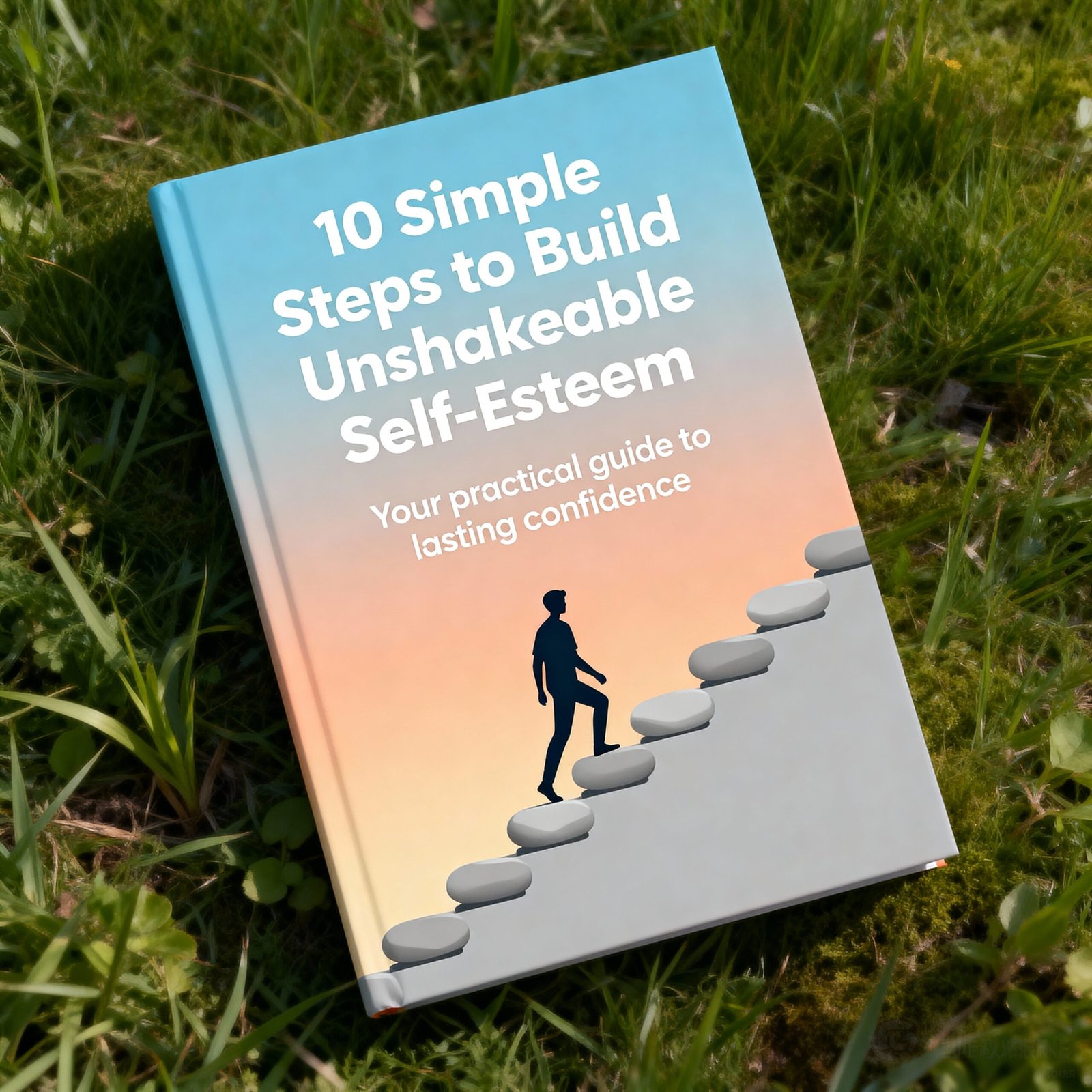

Self-esteem is the invisible foundation upon which we build our lives. It is the quiet, internal belief in our own worth and capabilities. When it is strong, it acts as a resilient bedrock, allowing us to navigate challenges, build healthy relationships, and pursue our goals with confidence. When it is weak, however, the entire structure of our life can feel unstable. Low self-esteem can be a silent saboteur, whispering doubts in our ear, holding us back from opportunities, and coloring our perception of the world in shades of fear and inadequacy.
For many, self-esteem feels like a fixed, unchangeable personality trait—something you either have or you don’t. As a media and marketing strategist who has spent two decades studying the psychology of belief and personal branding, I can tell you that this is one of the most pervasive and damaging myths of all. Self-esteem is not a trait; it is a skill. It is not something you are born with; it is something you build, practice, and strengthen over time, like a muscle.
The problem is that no one ever gives us the instruction manual. We are expected to navigate the complexities of life with this critical internal system, often without any clear guidance on how to maintain or repair it. This article is that instruction manual. It is not a list of empty platitudes or quick-fix promises. It is a practical, actionable, and comprehensive 10-step blueprint for a rewarding and transformative long-term project: the construction of a strong, resilient, and unshakeable sense of self-worth. Think of this guide as a detailed roadmap for how to build self-esteem from scratch, breaking down the process into simple, manageable actions that you can start implementing today.
Step 1: Master your inner monologue by challenging your internal critic
The first and most important battleground in the war for self-esteem is the space between your own ears. We all have an “inner critic”—that nagging internal voice that replays our mistakes, highlights our flaws, and compares us unfavorably to others. Low self-esteem is often a direct result of letting this inner critic run the show unopposed.
Understanding your inner critic
This voice is often a distorted echo of past experiences—a critical parent, a school bully, a demanding boss. Its primary motivation is often a misguided attempt to protect you from future failure or embarrassment by keeping you small and safe. The key is not to fight it, but to recognize it, question its authority, and consciously replace its narrative with a more balanced and compassionate one.
The technique: cognitive reframing
This is a powerful technique from Cognitive Behavioral Therapy (CBT) that you can practice yourself. It involves a simple, three-step process:
- Catch the thought: The next time you make a mistake and your inner critic says something like, “I’m such an idiot, I always mess everything up,” stop. Acknowledge the thought without judgment.
- Challenge the thought: Act like a detective and examine the evidence. Is it really true that you always mess everything up? Can you think of three times you succeeded at a similar task? Is this thought helpful, or is it just destructive? You will quickly realize that the inner critic’s statements are almost always dramatic, generalized, and factually incorrect.
- Change the thought: Create a more balanced, realistic, and compassionate counter-statement. For example: “I made a mistake on this task, which is frustrating. However, I am a capable person who has succeeded at many things. I will learn from this mistake and do better next time.”
Practicing this technique consistently is like sending your brain to the gym. It strengthens your ability to control your own narrative and to quiet the destructive voice of your inner critic.
Step 2: Build a ladder of competence with small, achievable goals
Self-esteem is not built on empty affirmations; it is built on evidence. It is the direct result of seeing yourself as a competent person who can get things done. The mistake many people make is setting huge, intimidating goals that lead to overwhelm and failure, which only reinforces their negative self-image. The secret is to start small.
The power of “small wins”
A “small win” is any task that you set out to do and successfully complete. The size of the task is irrelevant; the psychological impact of the completion is what matters. Each small win sends a powerful message to your subconscious mind: “I am a person who does what they say they will do. I am effective. I am capable.”
- Start ridiculously small: Your goal for today might be as simple as:
- Making your bed the moment you get up.
- Going for a 10-minute walk.
- Answering one difficult email you’ve been avoiding.
- Drinking a full glass of water.
- Build momentum: As you consistently achieve these small goals, you build a foundation of confidence. This momentum makes it easier to tackle slightly larger goals next week, and even larger ones next month. You are building a ladder of competence, one small, manageable rung at a time.
Step 3: Become an expert on yourself by identifying and celebrating your strengths
People with low self-esteem often have a distorted view of themselves. They have a magnifying glass for their flaws and a blind spot for their strengths. The goal of this step is to correct that distorted view with objective evidence.
The technique: your personal “strengths inventory” and “accomplishments log”
- The strengths inventory: Dedicate 30 minutes to creating an exhaustive list of everything you are good at. Do not be modest. This list should include:
- Professional skills: (e.g., “I’m a great public speaker,” “I’m excellent at organizing complex projects”).
- Personal qualities: (e.g., “I’m a very loyal friend,” “I’m a patient listener,” “I have a great sense of humor”).
- Simple life skills: (e.g., “I make a fantastic lasagna,” “I’m good at keeping my plants alive”). Keep this list and review it regularly, especially when you are feeling down.
- The accomplishments log: Get a simple notebook or a jar. At the end of every single day, write down at least one thing you accomplished. It can be big (“I finished a major project at work”) or small (“I finally cleaned out the garage”). The act of consciously acknowledging and recording your successes, no matter how minor, rewires your brain to look for evidence of your competence, not just your failures.
Step 4: Move your body to change your mind
The connection between physical and mental well-being is undeniable. Regular physical activity is one of the most powerful, fast-acting, and scientifically-proven methods for boosting self-esteem.
The science behind the feeling
- Neurochemical boost: Exercise releases endorphins, the body’s natural mood elevators. It also helps to reduce stress hormones like cortisol.
- A sense of agency and mastery: The act of pushing your body, of lifting a weight you couldn’t lift last month, or of running a little further than you did last week, provides direct, tangible proof of your strength and capability. You are taking control of your physical self, which translates into a powerful sense of mental control.
It’s not about how you look; it’s about how you feel
The goal of this step is not to achieve a specific body type or weight. The goal is to feel strong, energetic, and capable in your own skin. Find a form of movement that you genuinely enjoy, whether it’s walking, dancing, lifting weights, yoga, or rock climbing. For a wider range of ideas that go beyond just physical movement, the ultimate guide to self-esteem building activities for adults offers dozens of practical suggestions that can be incorporated into your daily life. The consistency of the practice is far more important than the intensity.
Step 5: Learn the power of “no” by setting healthy boundaries
Low self-esteem is often linked to a tendency to be a “people-pleaser.” The fear of disappointing others can lead us to consistently say “yes” to things that drain our energy, violate our values, or compromise our well-being.
Why boundaries build self-respect
Setting a boundary is a declaration that your own needs, time, and energy are valuable. Every time you politely but firmly say “no” to something that is not right for you, you send a powerful message to both the other person and, more importantly, to yourself: “I respect myself.” This act of self-respect is a direct deposit into your self-esteem bank account.
How to practice
Start small. Find a low-stakes situation where you can practice saying “no” politely.
- “Thank you so much for the invitation, but I won’t be able to make it.”
- “I appreciate you thinking of me for this project, but my plate is full right now and I can’t take on any new commitments.” You do not need to provide a long, elaborate excuse. A simple, respectful refusal is enough.
Step 6: Practice mindfulness and cultivate self-compassion
Self-esteem is not about believing you are perfect. It is about accepting yourself, flaws and all, with kindness and understanding.
- Mindfulness: This is the practice of paying attention to the present moment without judgment. A simple 5-minute daily practice of focusing on your breath can help you detach from the constant chatter of your inner critic and create a space of calm acceptance.
- Self-compassion: Coined by researcher Dr. Kristin Neff, this is the practice of treating yourself with the same kindness and understanding you would offer a good friend who was struggling. When you make a mistake, instead of berating yourself, try saying what you would say to a friend: “That was a tough situation, and you did the best you could. It’s okay to make mistakes. Everyone does.”
Step 7: Curate your environment by choosing your influences
We are incredibly influenced by the people and the information we surround ourselves with. Your self-esteem is a direct reflection of your environment.
- Your social circle: Spend more time with people who lift you up, who support and encourage you. Spend less time with those who are constantly critical, negative, or who drain your energy. This may require making some difficult decisions about your relationships.
- Your information diet: Pay close attention to how you feel when you use social media. If certain accounts consistently make you feel inadequate, jealous, or “less than,” unfollow them. Curate your feed to be a source of inspiration, education, and positive connection, not a tool for negative self-comparison.
Step 8: Step outside your comfort zone and embrace new challenges
Confidence is not something you have; it is something you build. And it is built by taking action, especially when that action is scary. The comfort zone is a safe place, but nothing grows there.
- Start small: The goal is not to immediately go bungee jumping. The goal is to consistently take small, manageable steps into the unknown.
- Speak up in a meeting when you would normally stay silent.
- Sign up for a class to learn a new skill you’ve always been interested in.
- Go to a networking event or a social gathering alone.
- The confidence loop: Every time you face a small fear and survive, you prove to yourself that you are more capable than you thought. This new confidence then makes it easier to tackle a slightly bigger challenge next time, creating a positive, upward spiral of growth.
Step 9: Develop resilience by reframing your relationship with failure
People with low self-esteem often view failure as a final, damning verdict on their worth. People with high self-esteem view failure as a temporary, necessary, and valuable part of the learning process.
- Failure is data: Every “failure” is simply a data point that tells you what didn’t work. It is not a reflection of you as a person.
- The power of reframing: When you experience a setback, consciously reframe the narrative. Instead of “I failed,” try “I learned.” Instead of “I’m a loser,” try “This approach wasn’t effective; I will try a different one.” This skill is especially critical for your long-term success. Building self-esteem after a setback is a core life skill, and it begins with changing the story you tell yourself about your challenges.
Step 10: Practice gratitude and shift your focus to contribution
Low self-esteem is often a symptom of excessive self-focus—a constant, internal rumination on our own perceived flaws and inadequacies. One of the most powerful ways to break this cycle is to shift your focus outward.
- Practice gratitude: Keep a simple gratitude journal. Every night, write down three specific things that went well that day and that you are grateful for. This simple act rewires your brain to scan the world for positives, not just negatives.
- Focus on contribution: Find a way to help others or contribute to a cause that is larger than yourself. Volunteer, mentor someone, help a neighbor. When you are focused on contributing to the well-being of others, you have less time and mental energy to spend worrying about your own perceived shortcomings. The act of being valuable to others is one of the most powerful ways to prove your own value to yourself.
The architecture of the self: building a foundation that lasts a lifetime
Building unshakeable self-esteem is not a quick fix or a one-time project. It is a journey, a daily practice, and a fundamental shift in how you relate to yourself and the world. It is the art and science of becoming your own best friend, your own most compassionate coach, and your own most steadfast supporter.
The ten steps outlined in this guide are not a rigid set of rules, but a holistic framework for a new way of living. It is a lifestyle built on the foundation of compassionate thoughts, mindful actions, and consistent, courageous effort. Each small step—every negative thought you challenge, every small goal you achieve, every new fear you face—is another brick in the foundation of your self-worth.
This is the most important project you will ever undertake. A successful career, loving relationships, and a fulfilling life are all built upon this invisible foundation. By committing to this process, you are not just building self-esteem; you are building the architecture of a stronger, more resilient, and more joyful self.
Leave a Reply